HEAD TO HEAD
Mailchimp vs MailerLite: leaving the incumbent for a clean newsletter
 vs

Mailchimp is the platform everyone integrates with, but you pay incumbent prices for a feature set a newsletter rarely uses in full. MailerLite covers the core job, campaigns, forms and a welcome automation, with cleaner tooling and a lower bill at most list sizes. If integrations or an entrenched team workflow lock you in, stay; otherwise MailerLite is the better fit for a steady list.
Pick it ifMailchimp
Stay if your stack is wired around it: the integration marketplace, the brand every tool connects to, and reporting your team already reads. You pay incumbent prices for features a plain newsletter rarely touches.
Free plan, paid from $13/mo · Free up to 250 contacts, 500 emails/moVisit MailchimpOur pick for most readersMailerLite
The better home for a running list: campaigns, signup forms and a welcome automation with cleaner editors, a permanent free tier to trial the migration, and a simpler ladder that costs less at most list sizes.
Free plan, paid from $12/mo · Free up to 250 subscribers, 2,500 emails/moTry MailerLiteThe two ladders side by side
| At a glance | Mailchimp | MailerLite |
|---|---|---|
| Positioning | The incumbent everyone integrates with, priced by contacts with sending multiples per plan. | Newsletter-first platform with clean tooling and automations, priced by active subscribers. |
| Billing unit | per contact | per contact |
| Free plan | Free up to 250 contacts, 500 emails/mo | Free up to 250 subscribers, 2,500 emails/mo |
| Plans | Essentials: $75/mo at 5,000 contacts Standard: $100/mo at 5,000 contacts Premium: see pricing | Comfort: $49/mo at 5,000 contacts Power: $69/mo at 5,000 contacts |
| Entry price | free plan, paid from $13/mo | free plan, paid from $12/mo |
| Billing notes | Monthly billing only; sending allowances are 10x, 12x or 15x the contact tier depending on plan, and overages are charged. There is no 1,000-contact tier: between 501 and 1,500 contacts you pay the 1,500 tier. | Priced by active subscribers; annual billing saves 10%. EUR prices are also published. |
Amounts come from each provider's official pricing page and can change: the official Mailchimp pricing page · the official MailerLite pricing page.
Both price by contacts, but the send rules differ. Mailchimp meters campaigns as a multiple of your contact count per plan, so a large list that emails often can brush the ceiling and get pushed up a tier before you expected it. MailerLite's ladder is simpler and starts lower, and its Comfort plan caps monthly emails at ten times the tier ceiling, which only bites at a daily cadence. MailerLite also keeps a permanent free tier (free plan, paid from $12/mo), enough to import a sample and rebuild a signup flow before paying. Put your real numbers through the cost calculator before deciding on headline price.
What you actually give up
Mailchimp's real moat is not the editor, it is the ecosystem. It is the default connector for storefronts, form tools, CRMs and analytics, so a Mailchimp export usually has a native destination. Leaving means re-pointing those integrations, and a few niche ones may only support Mailchimp. Check your connected apps first. MailerLite covers the common ones (major store platforms, Zapier, popular form and landing tools) but the long tail is thinner. If a business-critical tool speaks only Mailchimp, that single dependency can outweigh every pricing argument on this page.
Building the newsletter and welcome flow
For a newsletter with a welcome sequence, both cover the standard path: drag-and-drop editor, signup form, a trigger on subscription, a delay, a branch on opens or clicks. MailerLite's editors are more polished and its templates ship faster, which is the day-to-day reason people move. Mailchimp's builder does the same logic with more chrome around it. Neither reaches CRM-grade automation with scoring or deep branching on purchase data, which is ActiveCampaign territory. A full build of the same scenario on both, with timings, is on our test slate and will appear under Tests when run.
Who should pick which
- Plain newsletter, wants nicer tooling and a lower bill: MailerLite, with the free tier making the trial risk-free.
- Stack wired around Mailchimp integrations: stay, or map every connected app before moving.
- List sends often and is large: watch Mailchimp's send multiples pushing you up a tier; compare against MailerLite in the calculator.
- Ready to move: follow the Mailchimp to MailerLite switch guide, where consent records and automations are the risky part, not the subscriber file.
The same newsletter and the same welcome sequence
| The same brief | Mailchimp | MailerLite |
|---|---|---|
| What the bill follows | contacts stored | contacts stored |
| Cheapest plan that covers the brief | Essentials at 5,000 contacts $75/mo | Comfort at 5,000 contacts $49/mo |
| Monthly sends included | 50,000 emails | 50,000 emails |
| Headroom after the brief | 27,750 sends left | 27,750 sends left |
The brief, identical on every comparison here: a list of 5,000 contacts, one newsletter to everyone each week (21,650 sends a month) and the same three email welcome sequence for 200 new subscribers (600 sends), so 22,250 sends in all. Prices and allowances are read from each provider's published ladder. Where an allowance is not published we say so rather than estimate it.
What the two products actually look like
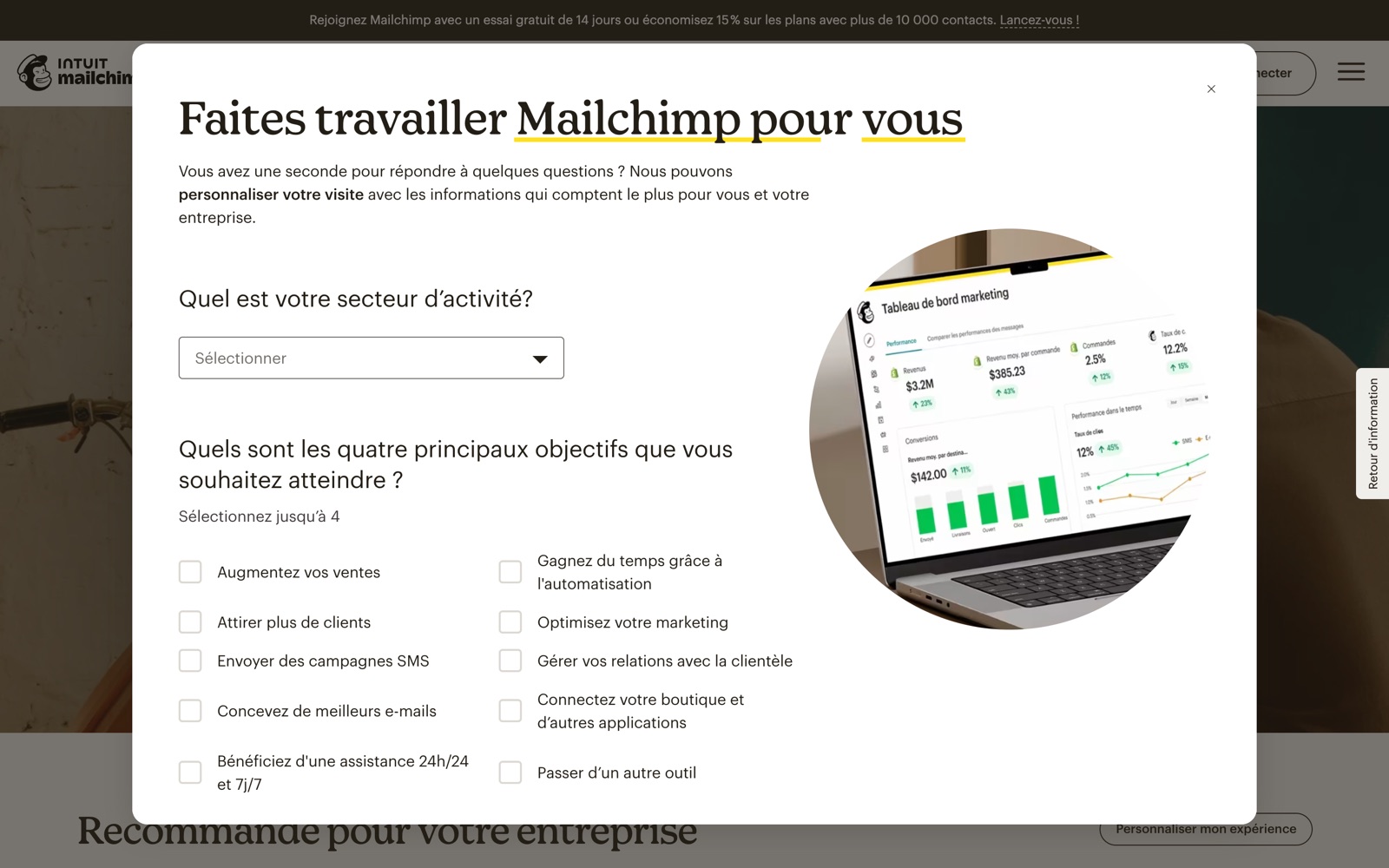
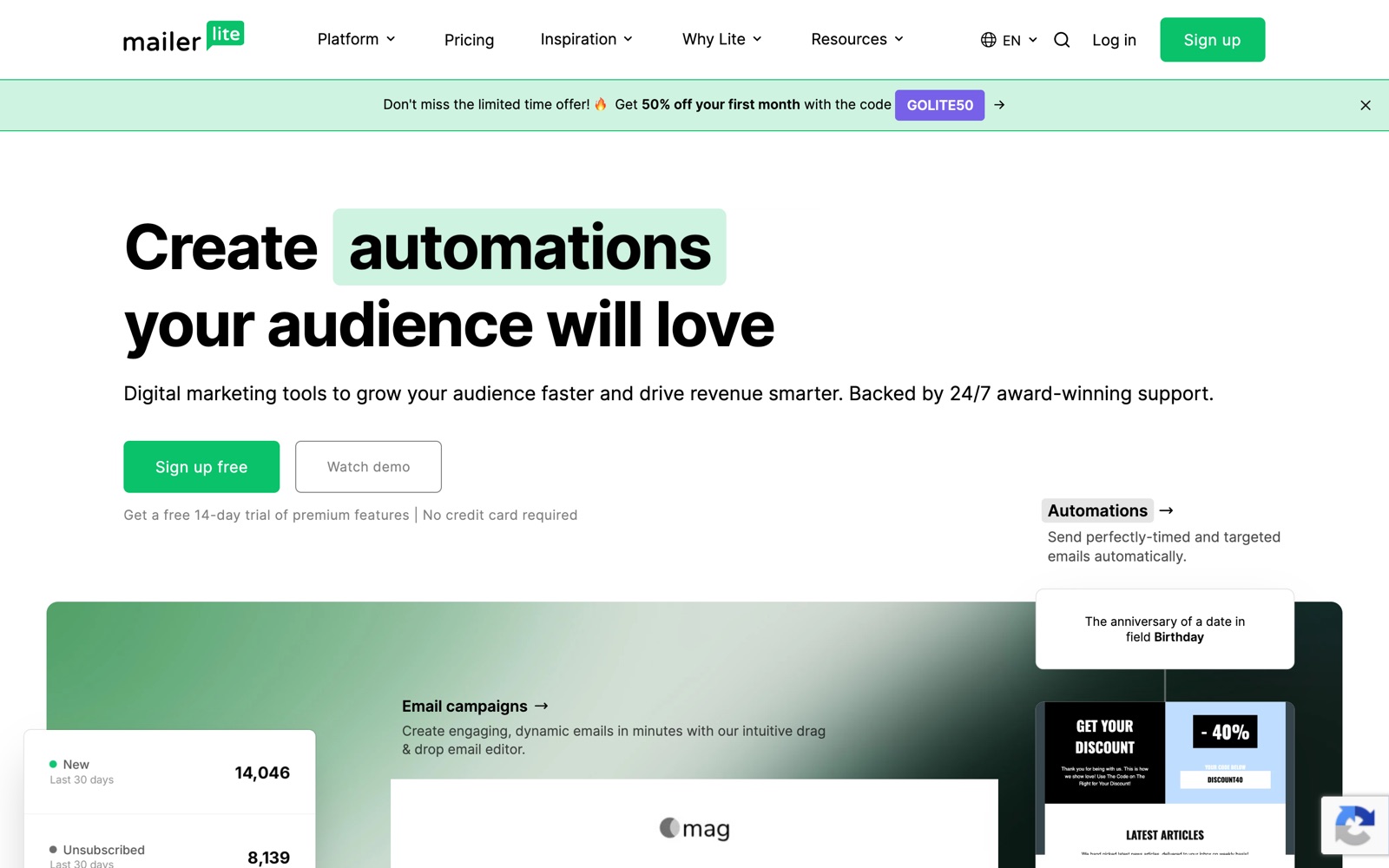
What we checked, and where it comes from
Mailchimp
- Paid plans charge overage fees when contact or send limits are exceeded; the free plan suspends sending instead. Source: mailchimp.com/help/about-mailchimp-pricing-plans
- Sending multiples are 10x (Essentials), 12x (Standard) and 15x (Premium) of the contact tier. Source: mailchimp.com/forms/pricing/?currency=USD
- Premium does not exist below 10,000 contacts; Essentials stops at 50,000. Source: mailchimp.com/forms/pricing/?currency=USD
- Essentials stops at 50,000 contacts, Standard runs to 100,000 and Premium to 250,000. Source: mailchimp.com/forms/pricing/?currency=USD
- Monthly send allowances are published per tier in the official feed and match 10x (Essentials), 12x (Standard) and 15x (Premium) of the contact tier. Source: mailchimp.com/forms/pricing/?currency=USD
- No annual billing ladder is published: the feed exposes monthly plan packages only. Source: mailchimp.com/forms/pricing/?currency=USD
MailerLite
- Current plan names are Comfort and Power; the old Growing Business and Advanced names are gone. Source: the official MailerLite pricing page
- Comfort caps monthly emails at 10x the subscriber tier ceiling; Power is unlimited under fair use. Source: the official MailerLite pricing page
- Exceeding a paid tier triggers an automatic, notified upgrade to the next tier; free accounts over 250 subscribers have sending locked. Source: the official MailerLite pricing page
How to read this: every capability above is taken from the provider's own published pages, and each line names where it came from. We have not run a paid side by side test of these two platforms, so nothing on this page is presented as a test result. The hands on protocols we do publish, and their limits, are on the tests page. Where a provider does not publish something, we say so instead of estimating it.
Questions people also ask
Will MailerLite always cost less than Mailchimp?
At most published sizes, yes, especially once you account for Mailchimp's send multiples pushing active senders up a tier. But annual billing and the exact rung your list lands on can narrow or flip the gap, which is what the calculator settles for your numbers.
Can I keep my Mailchimp integrations after switching?
The common ones (store platforms, Zapier, popular form tools) have MailerLite equivalents. The risk is a niche app that only speaks Mailchimp. Audit your connected apps before you commit; that single dependency decides more switches than price does.
How hard is the migration itself?
The subscriber file imports cleanly. The care goes into consent records, segments and rebuilding automations so nobody gets a duplicate welcome. Follow the migration checklist and stage it alongside your live account.